

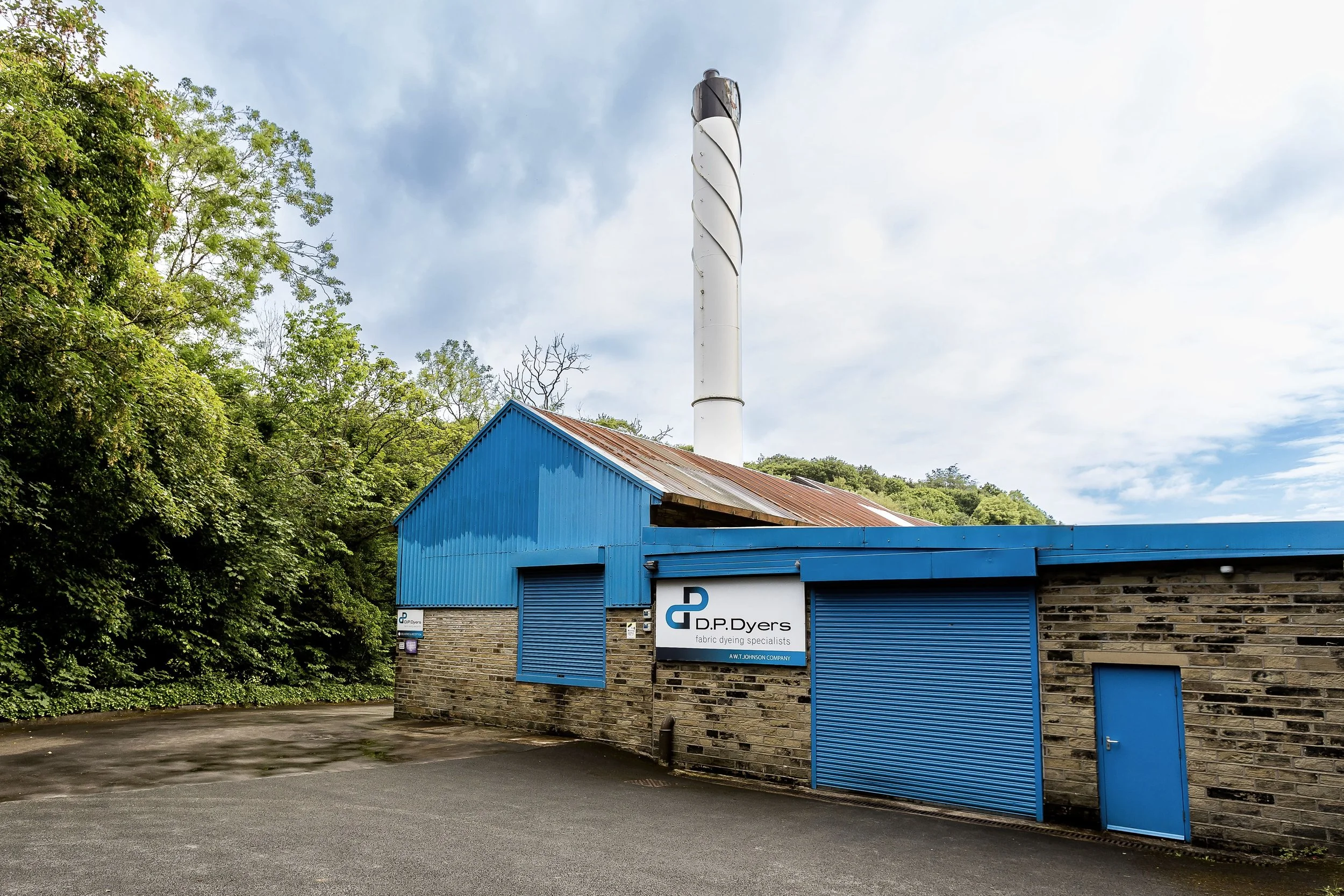
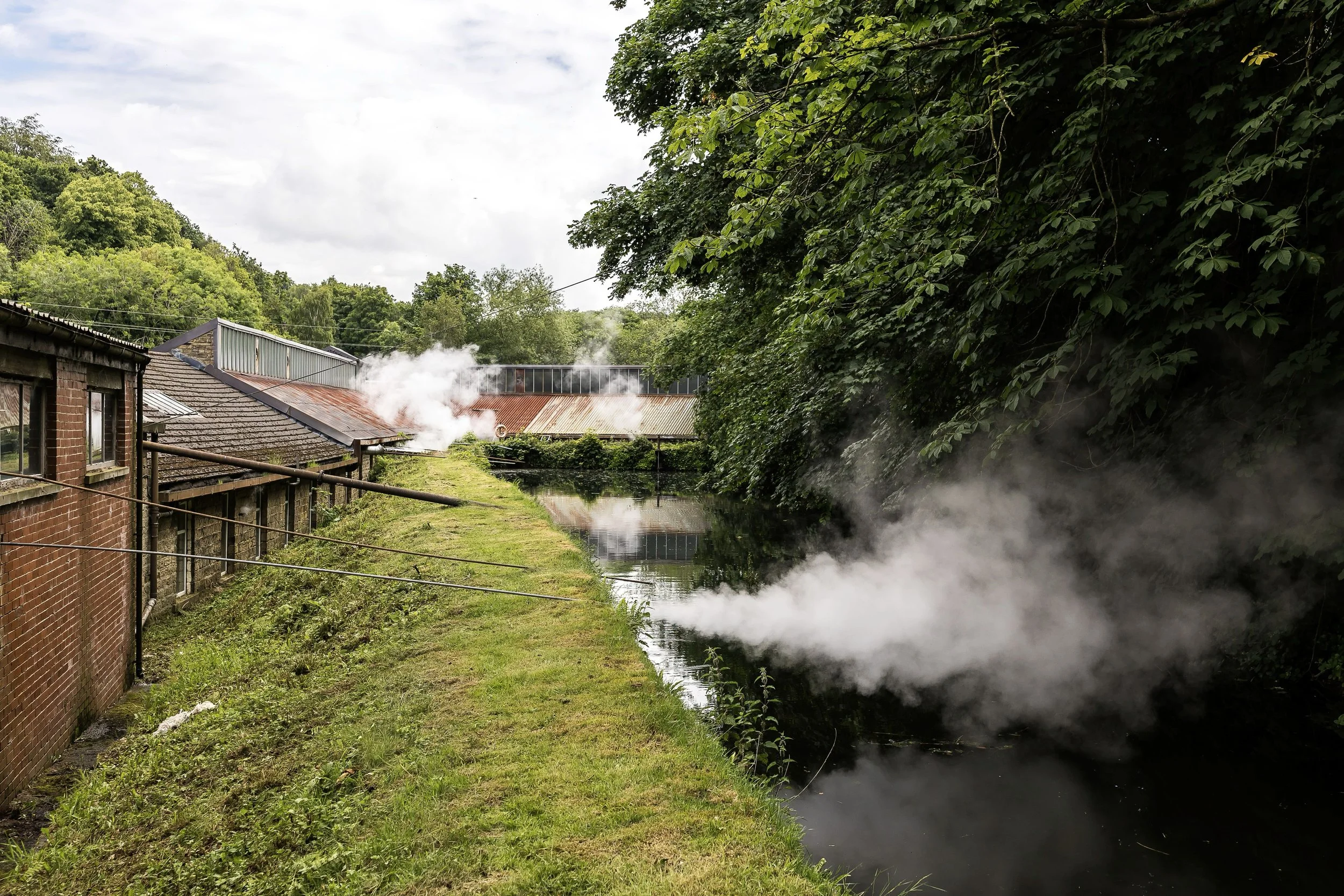
I was brought in by Wonder Agency in Leeds to photograph two Yorkshire textile businesses from the same family: WT Johnson in Huddersfield and its sister dyehouse, DP Dyers. I was working alongside filmmakers Dave Hackney of Digital Cortex and Damian Bowker of Stay Curious Films. This post is the DP Dyers half of the story. They’re commission piece dyers, tucked into the valley at Honley near Holmfirth, colouring natural and synthetic fabrics for fashion and furnishing. Plain cloth comes in and leaves in just about every colour you can think of.
Manufacturing photography is one of the things I specialise in, and this place shows why I love it.
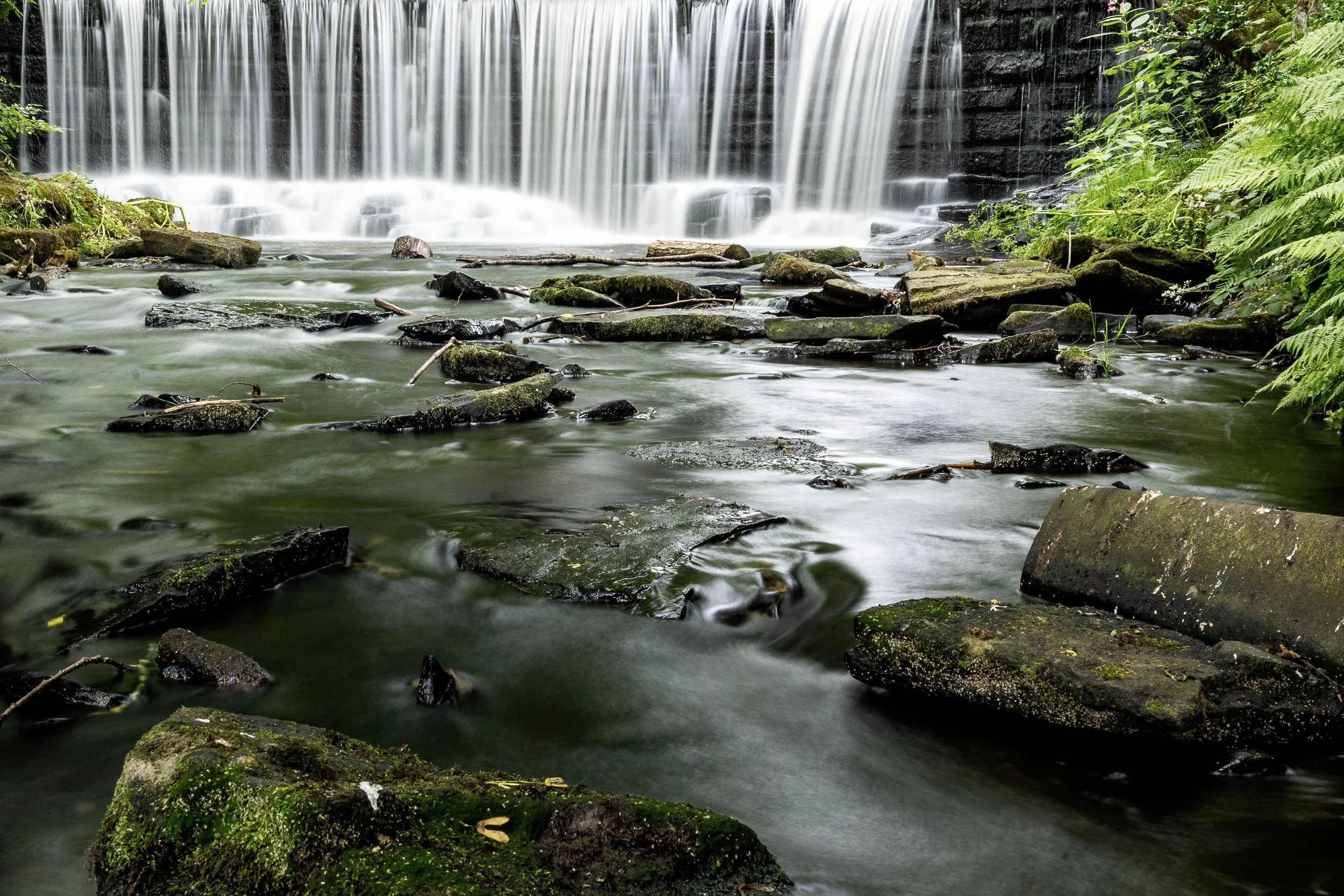
Wander down the bank and there’s a weir pouring over old stonework. That water is the reason mills like this were built where they were and this water is still used to this day.
Where white cloth becomes colour
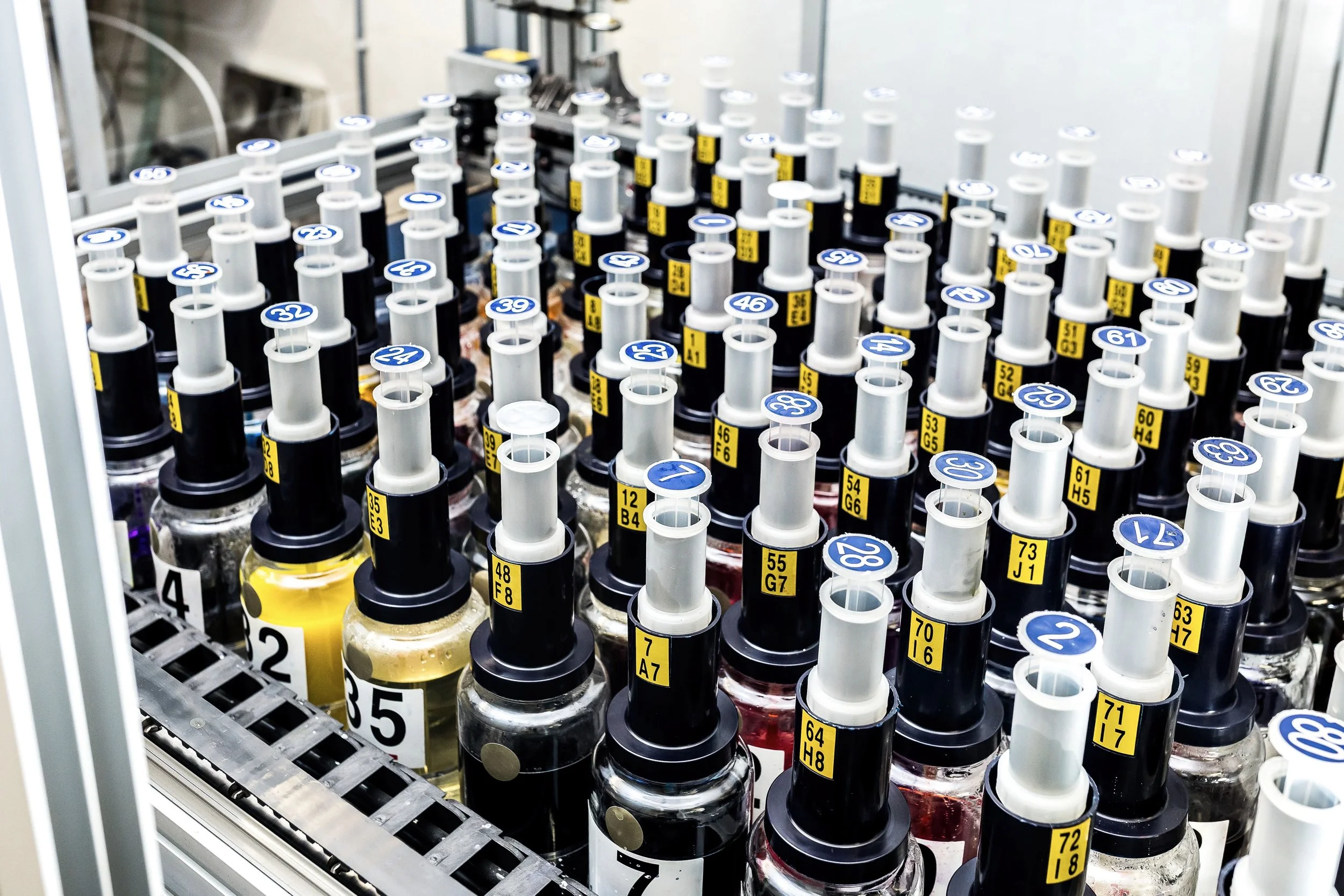
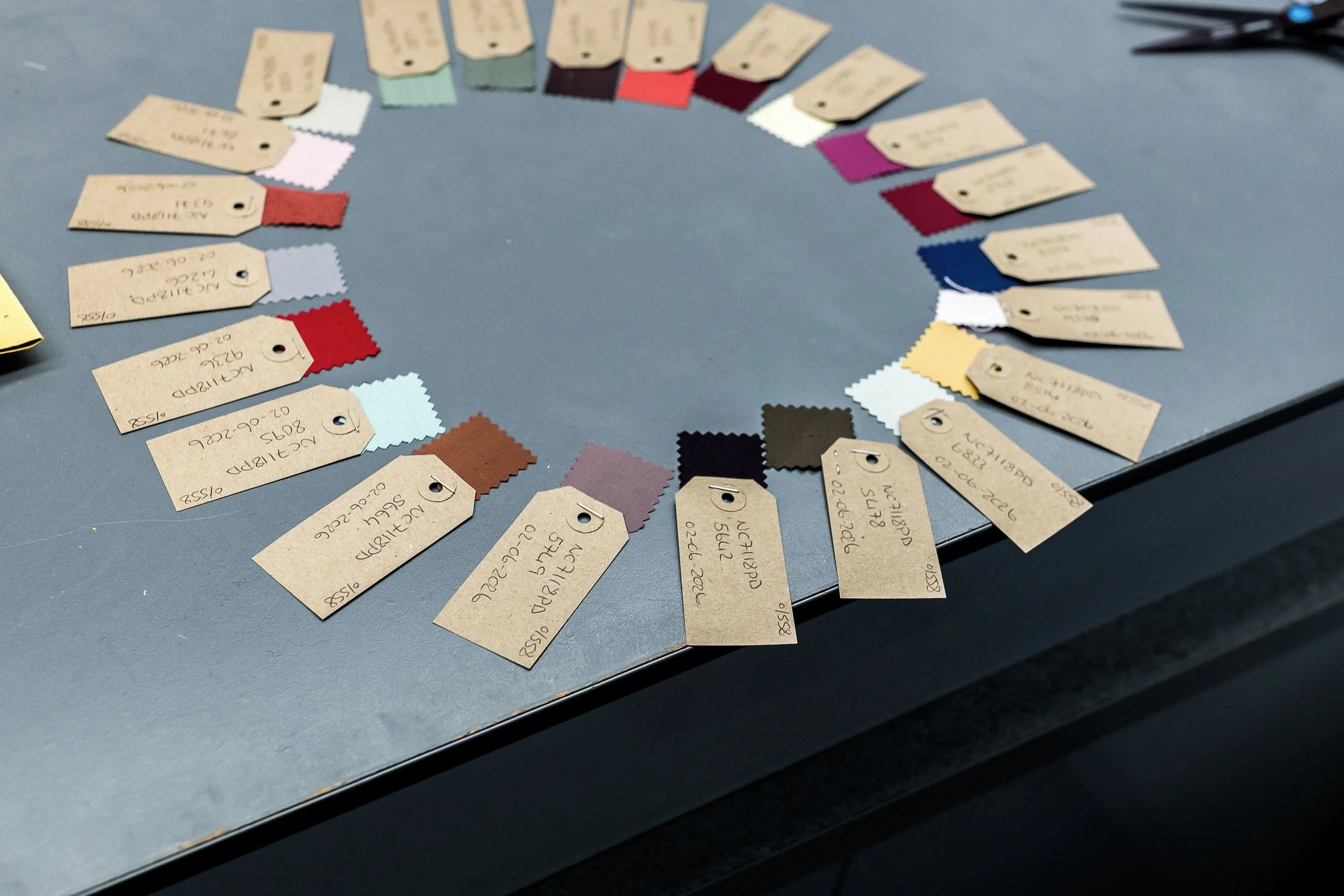
Every colour starts small. Before a bulk order goes anywhere near the big machines, the lab dyes small samples for the customer to approve. There are rows of numbered dye bottles, little steel beakers each holding a twist of cloth, and handwritten tags with swatches laid out in a full circle of colour on the bench. The lab is properly modern, with digital colour weighing and research work alongside the University of Leeds, but the final call still comes down to a trained eye.
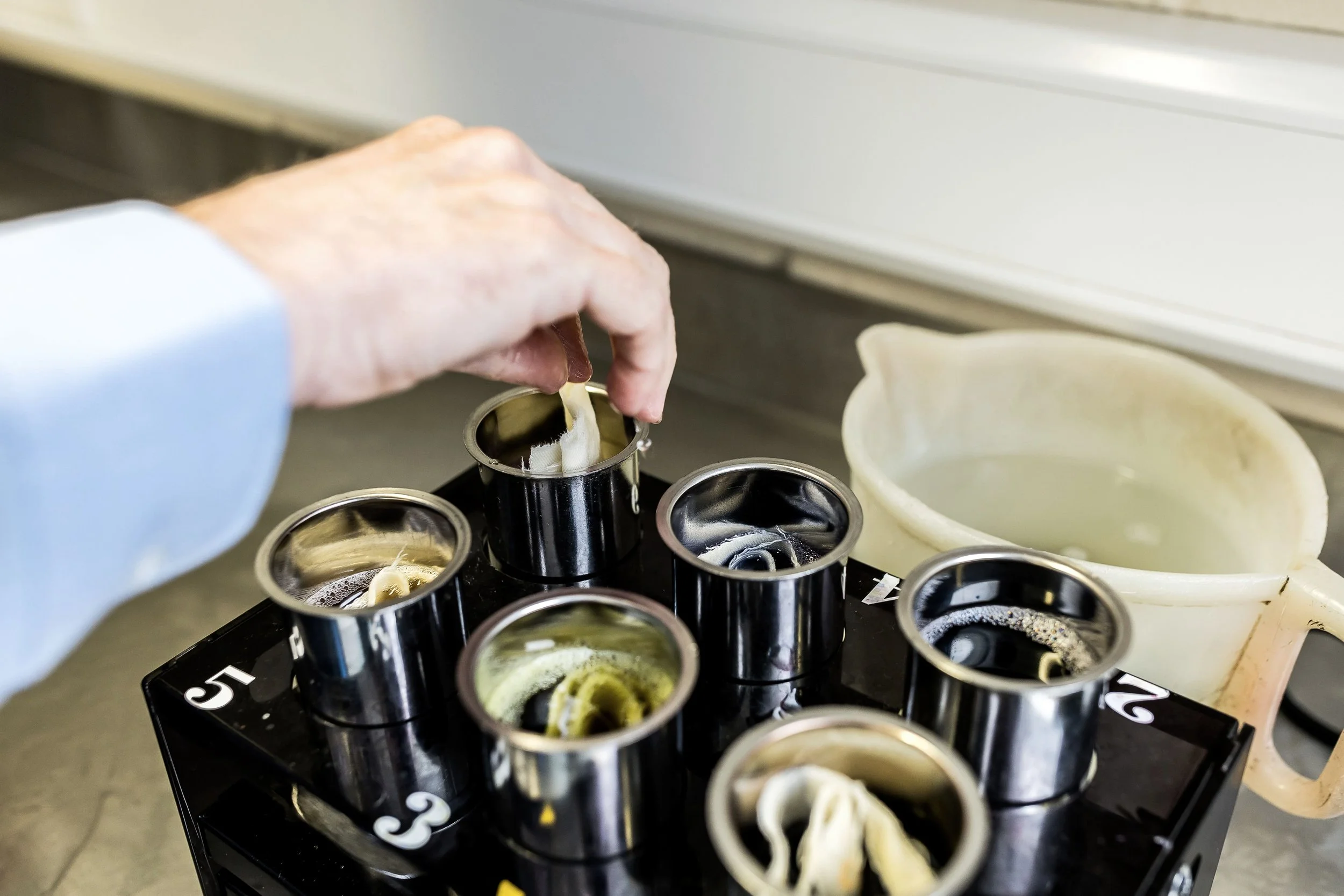
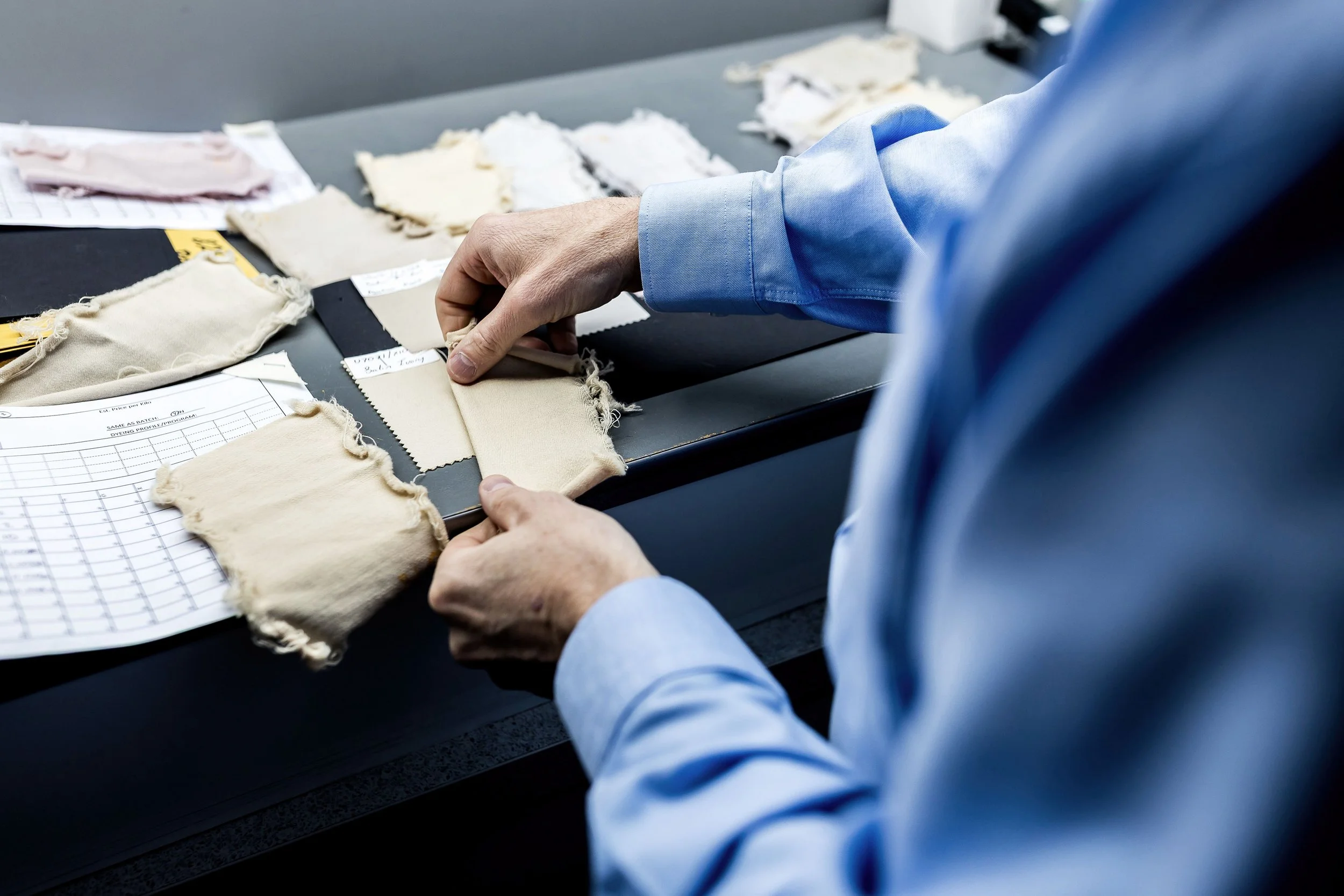
A swatch gets held against the standard, turned to the light, compared and compared again. You don’t fake that kind of care for a camera.
Inside the dyehouse
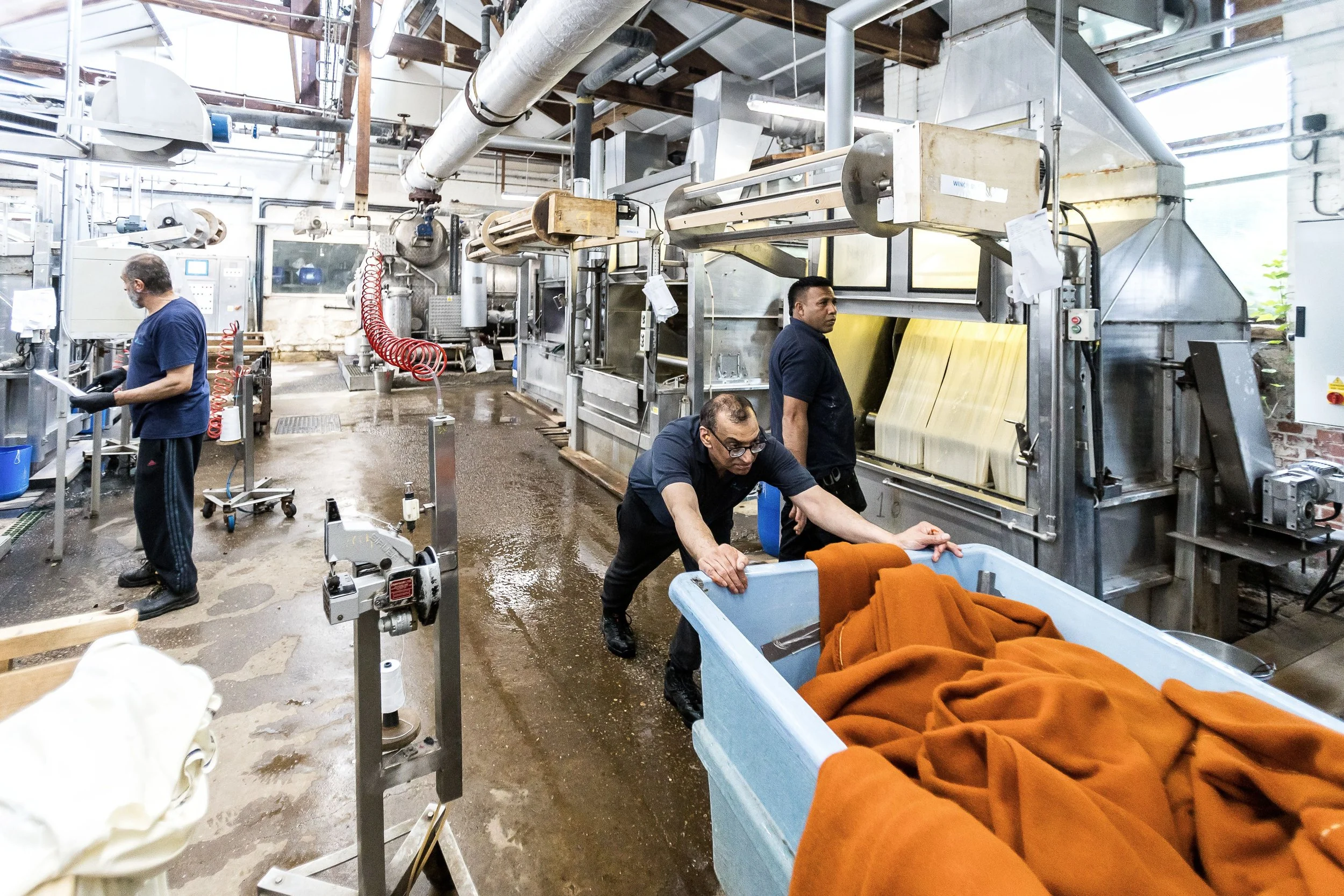
Then you go through to the dyehouse floor, and it’s a different world. It’s warm, wet and loud, with steam in the air and big stainless steel machines working in rows. Some of the cloth coming through was super fine wool and cashmere, so this is no place for guesswork.
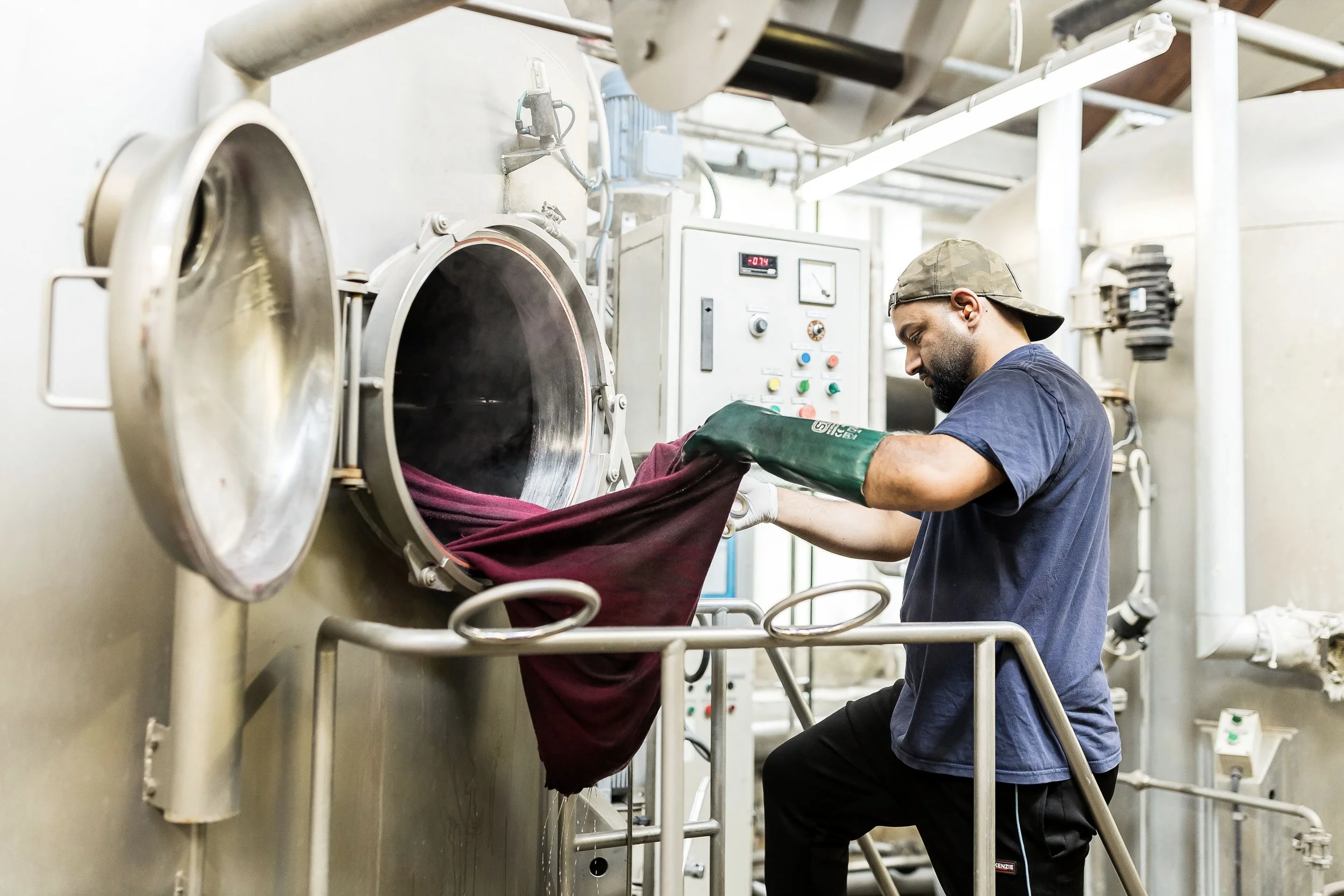
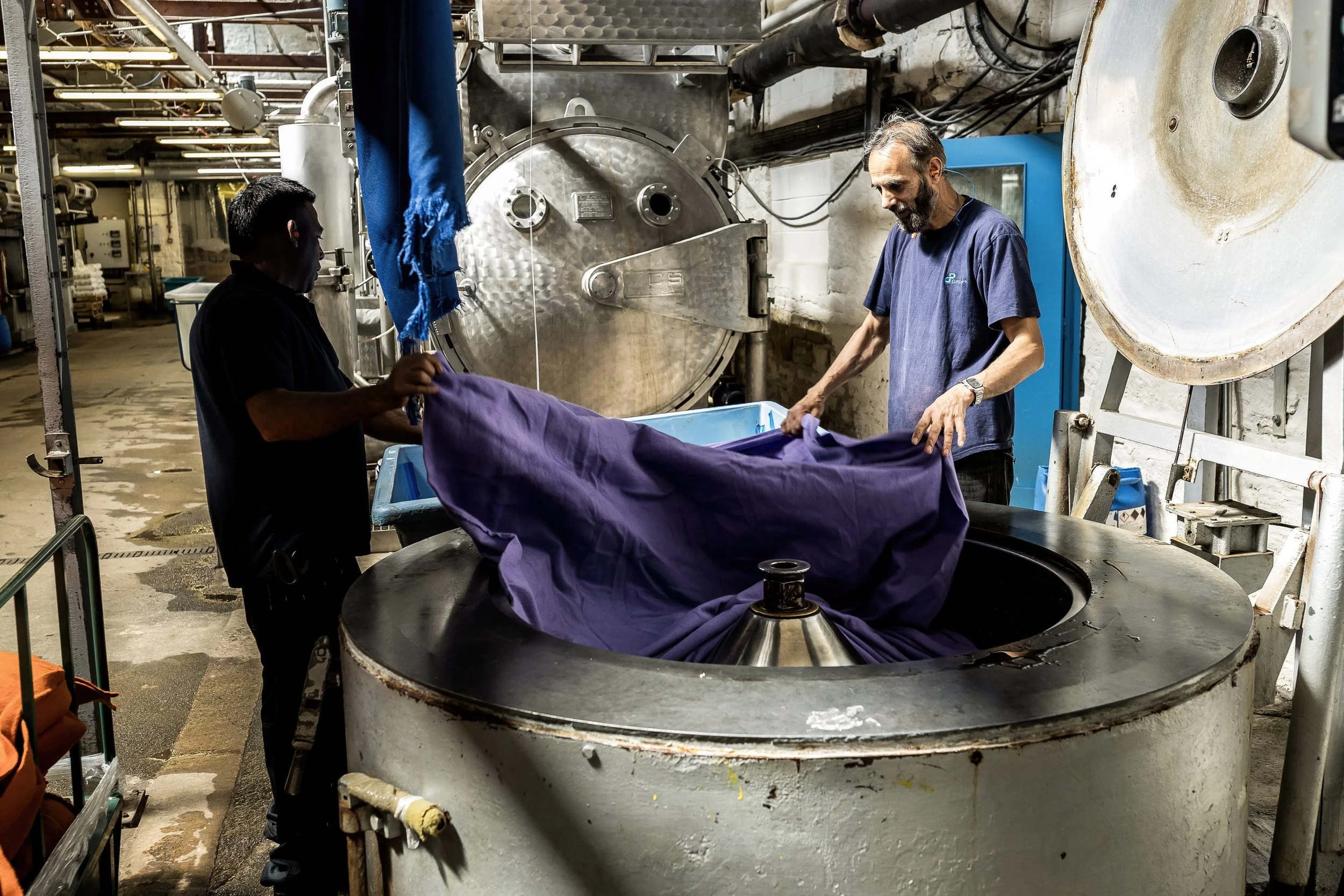
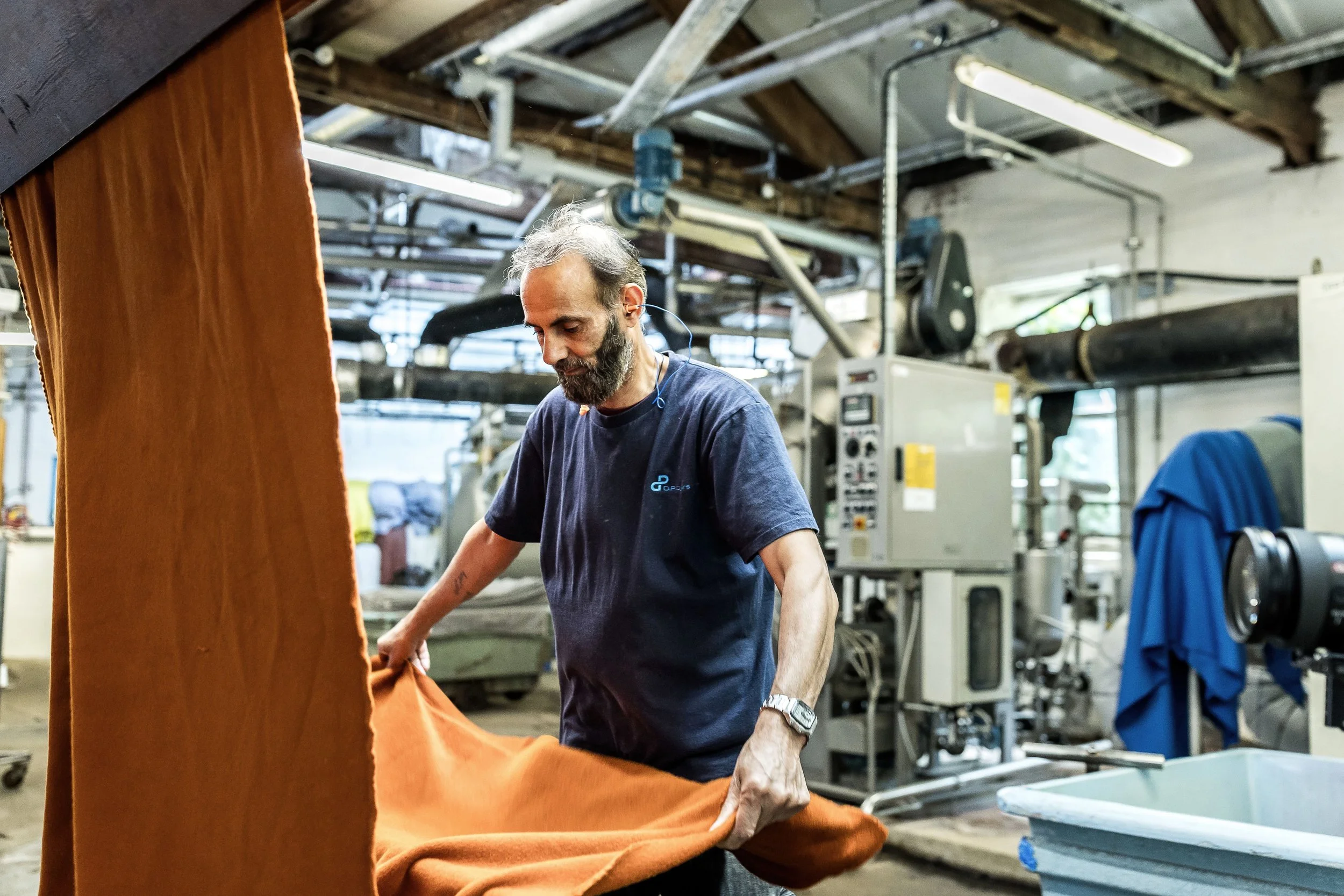
Watching the fabric come round through the steam is mesmerising. One minute it’s violet; the next it’s a deep burnt copper.
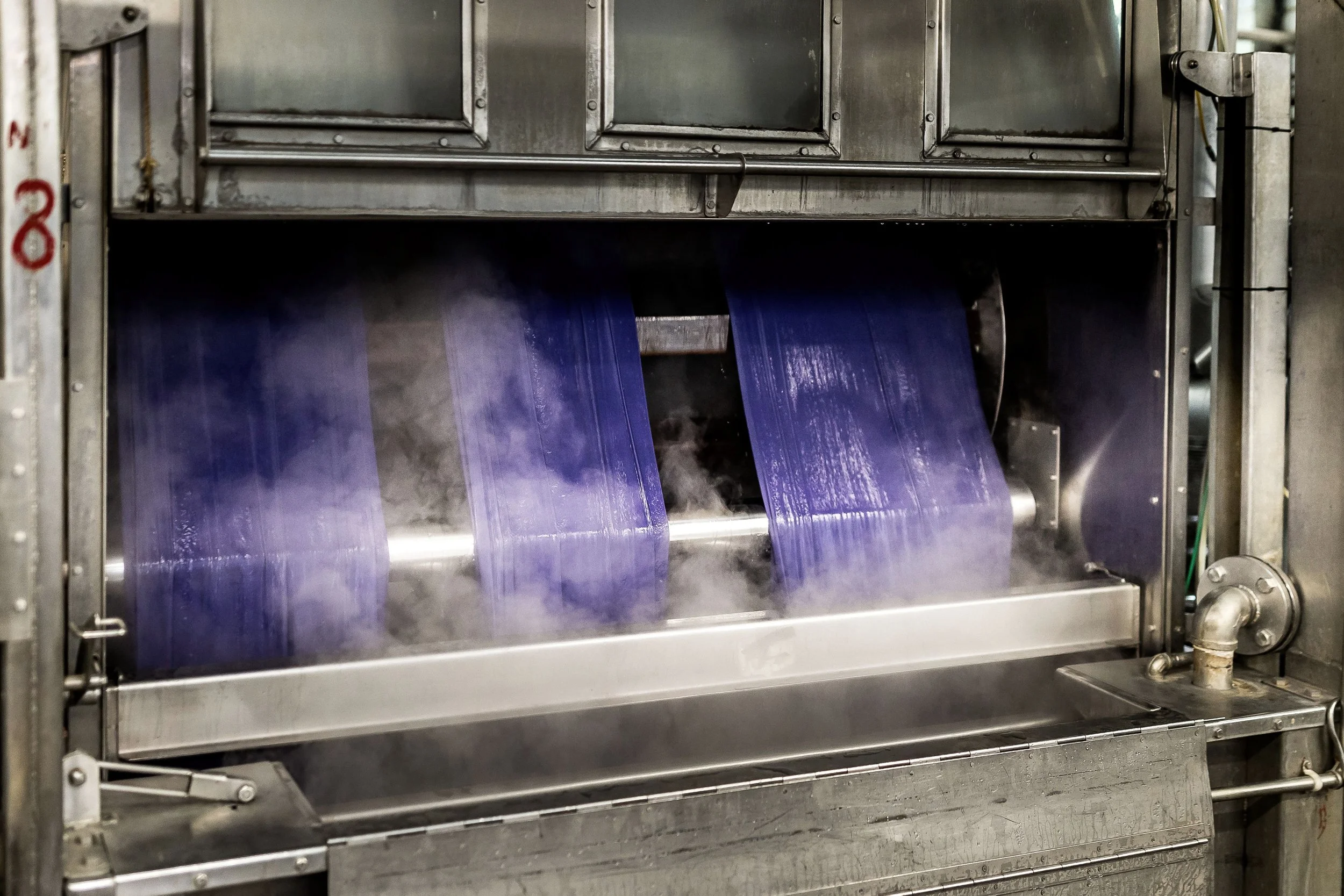
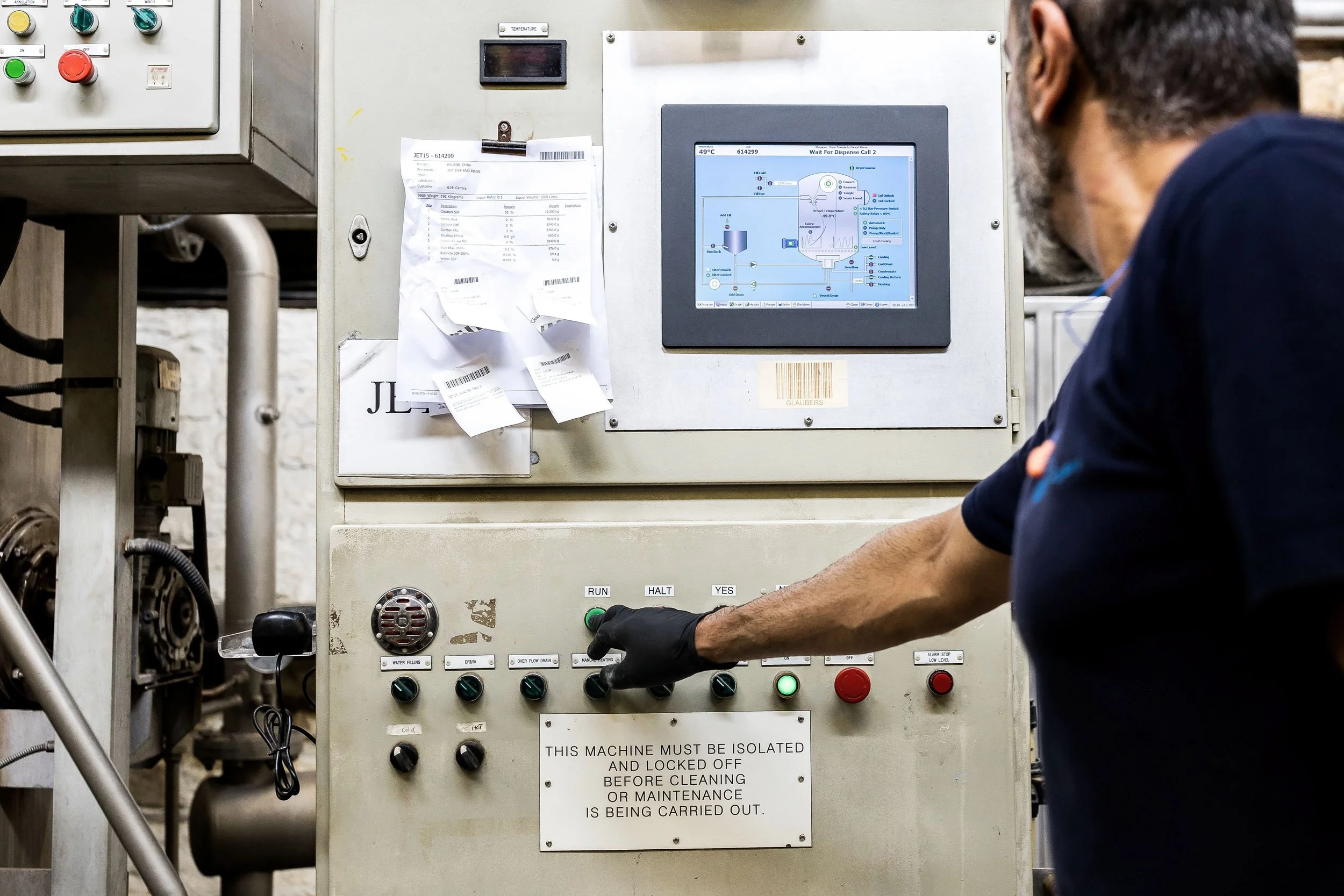
The old and new sit side by side here. Every batch has its recipe sheet clipped to the machine, and a touchscreen shows the vessel ticking along at 49°C. But the dye itself still goes in the old-fashioned way: mixed in a steel bucket with a whisk, then poured straight into the machine. A bucket of red tipping into a tank of violet cloth is one of those frames you hope for and rarely get.
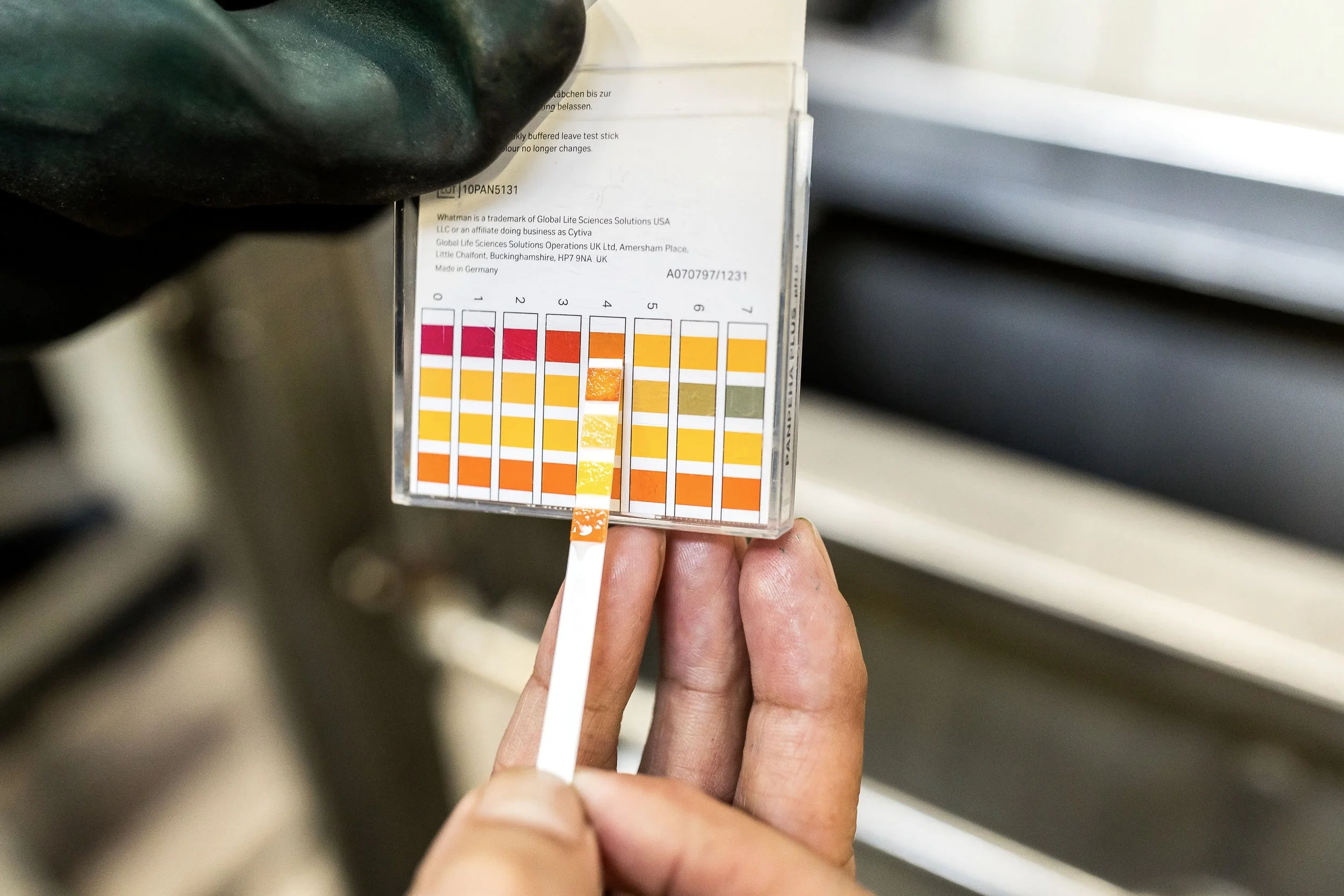
Even the chemistry gets checked by hand, with a pH strip held up against the chart before anyone moves on.
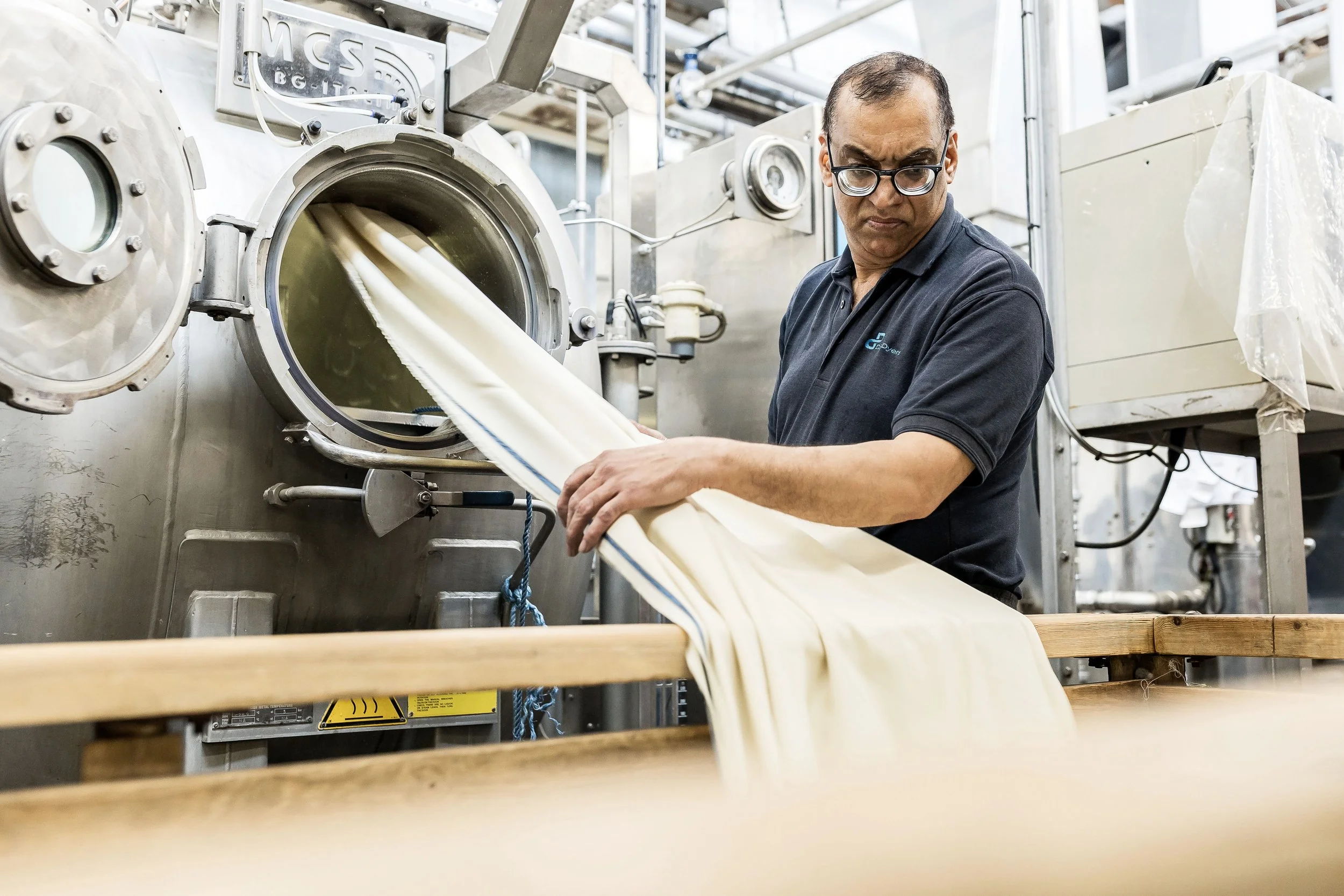
Cloth is fed in and drawn out by hand, checked as it goes, and stacked into the old wooden trolleys that rumble up and down the floor between machines.
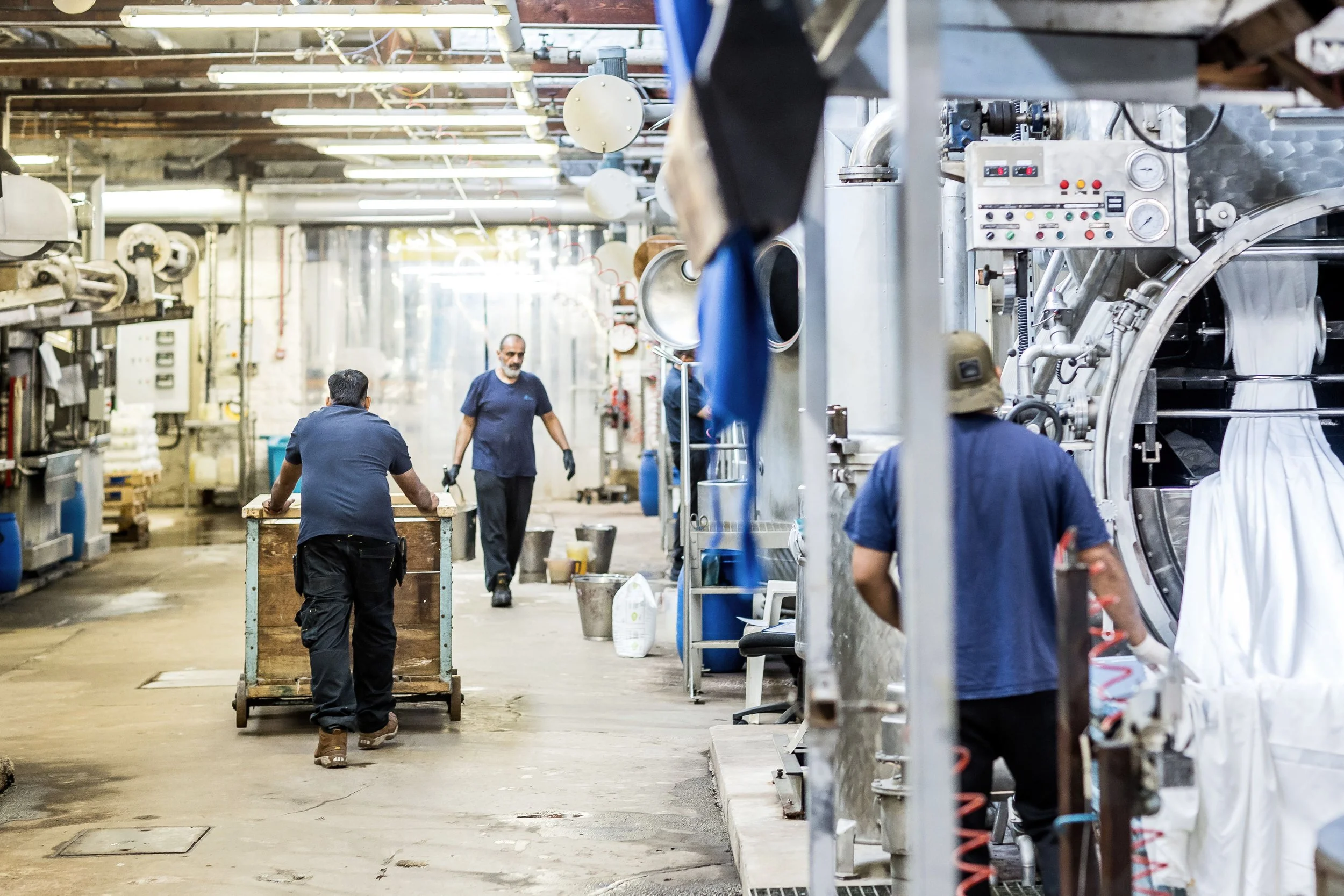
The people who make it work
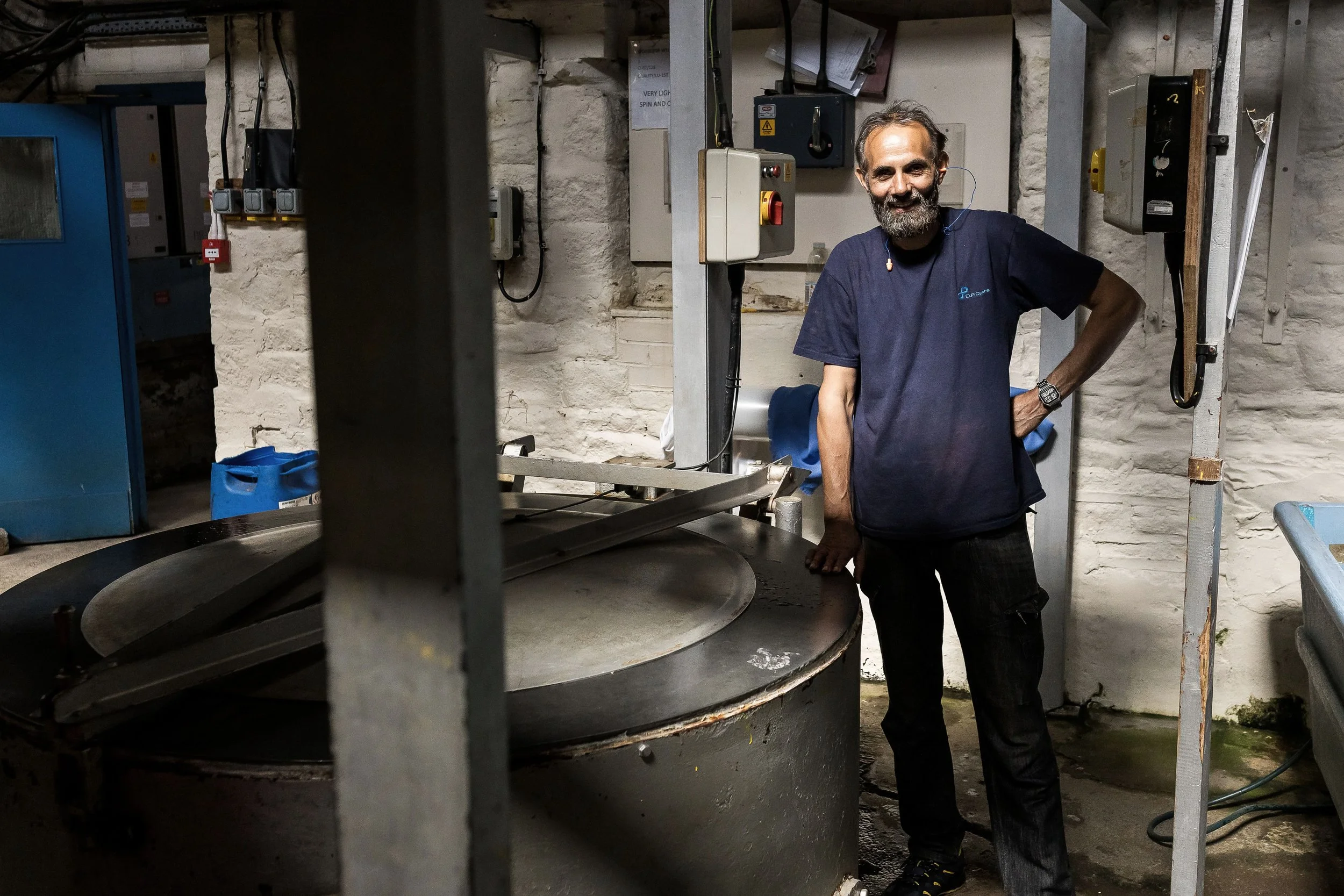
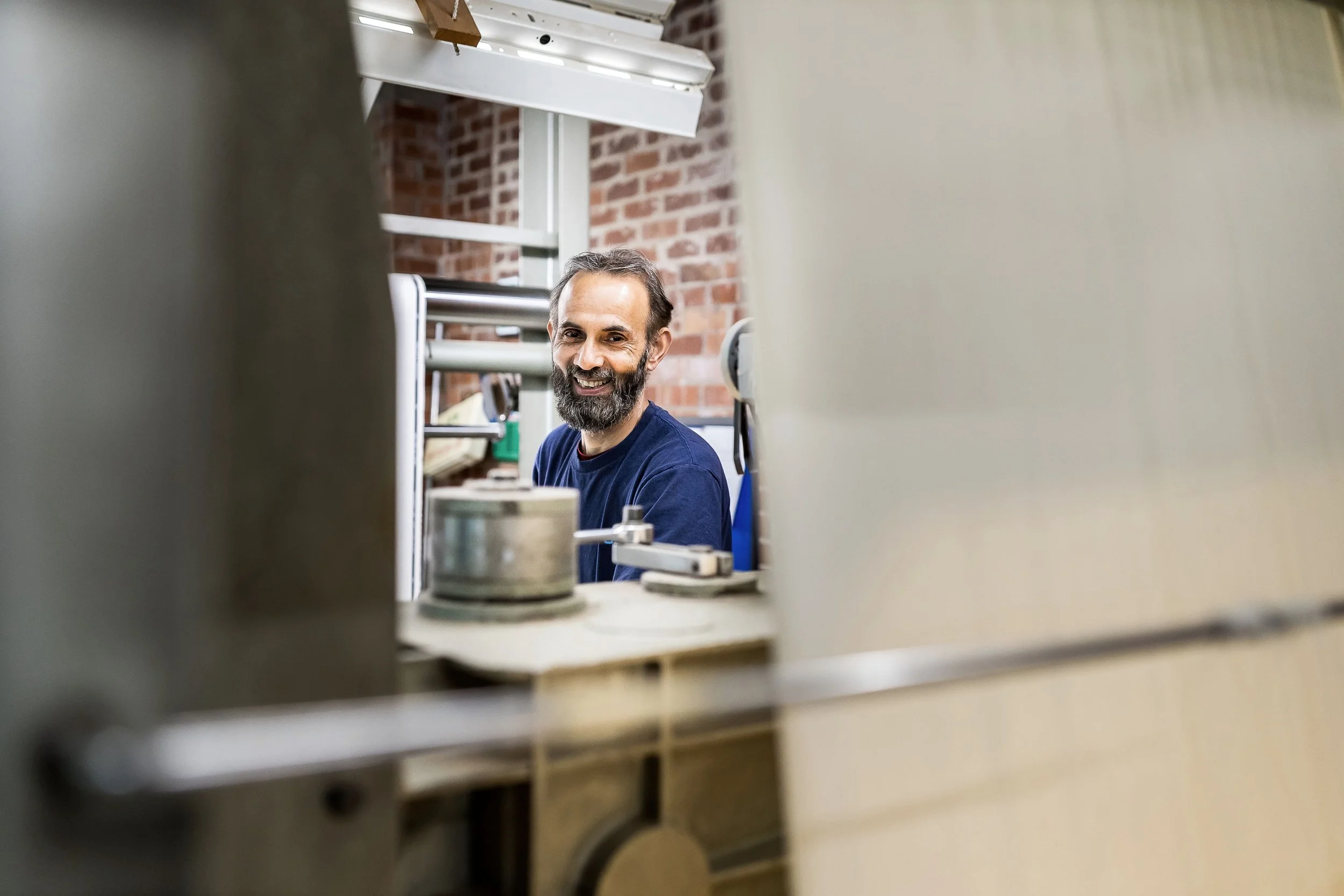
The machines are impressive, but the people are the real story. These are folk who know their job inside out and clearly get on with each other. There was plenty of leg-pulling, a few waves at the camera, and one lad who seemed to appear in my viewfinder every time I turned round, always grinning.
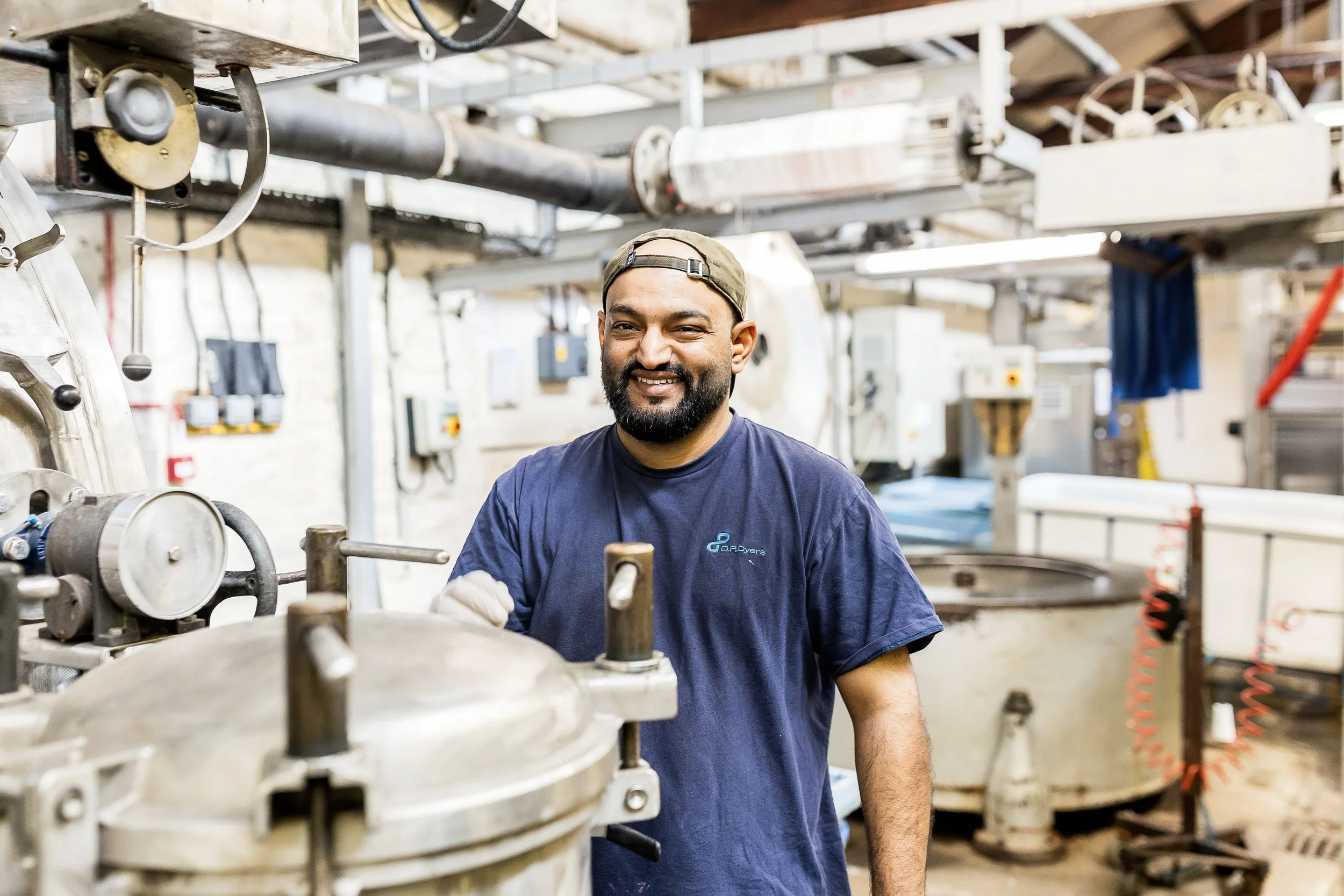
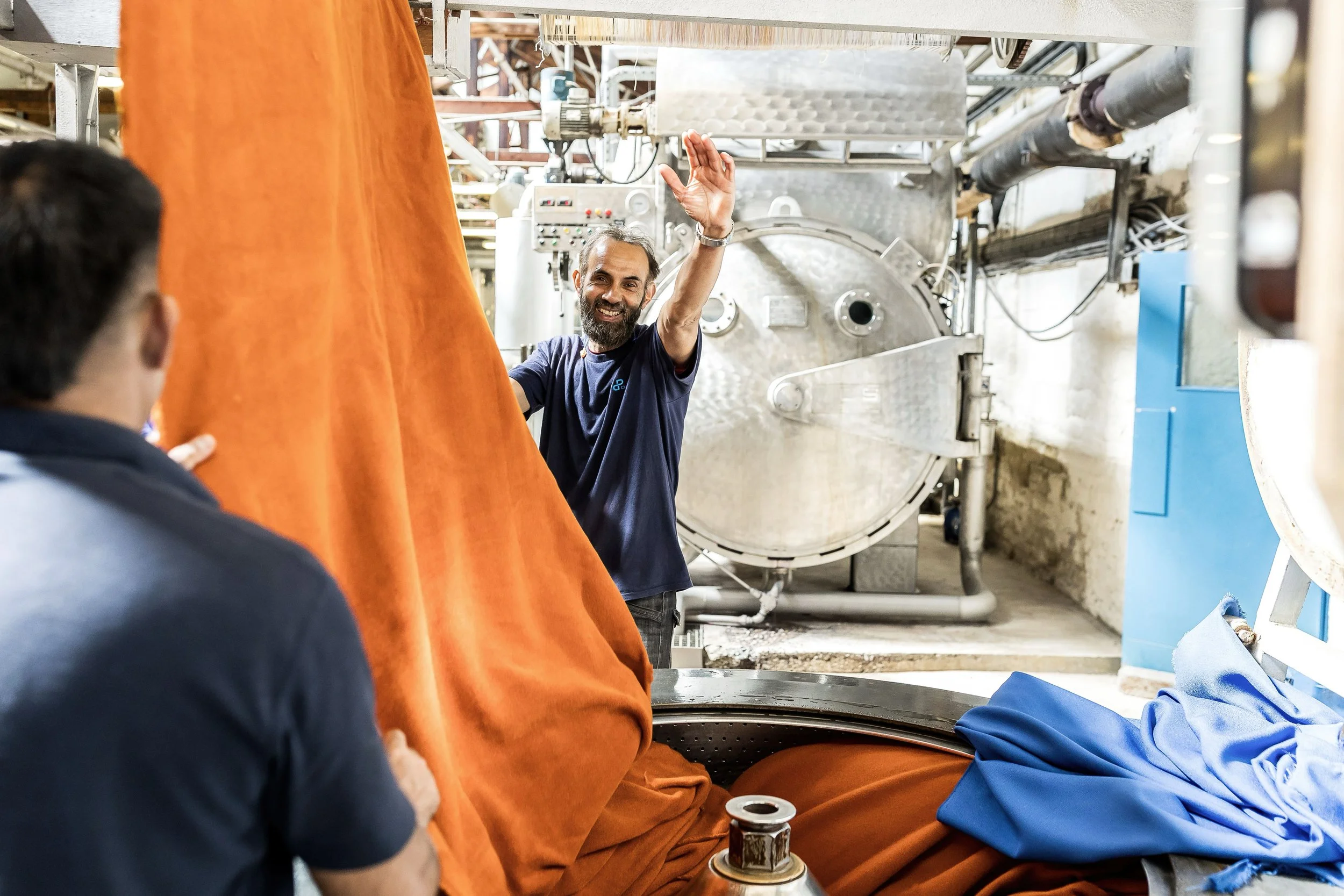
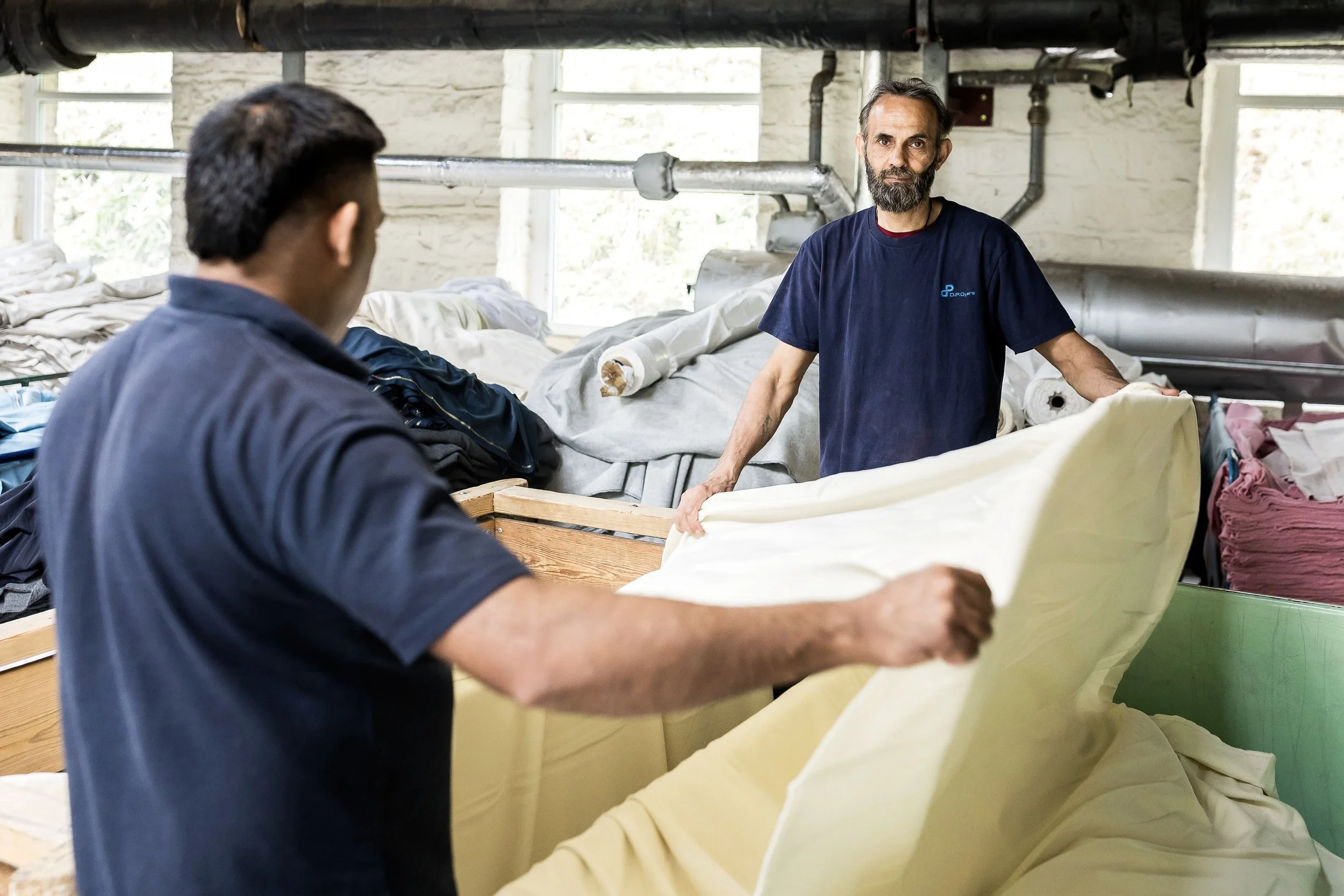
I’m not interested in lining people up in front of a machine and asking them to look busy. I’d rather watch, wait and catch what’s really happening: two people spreading a length of cloth between them, a quiet moment of concentration, a straight look down the lens when someone stops for a second.
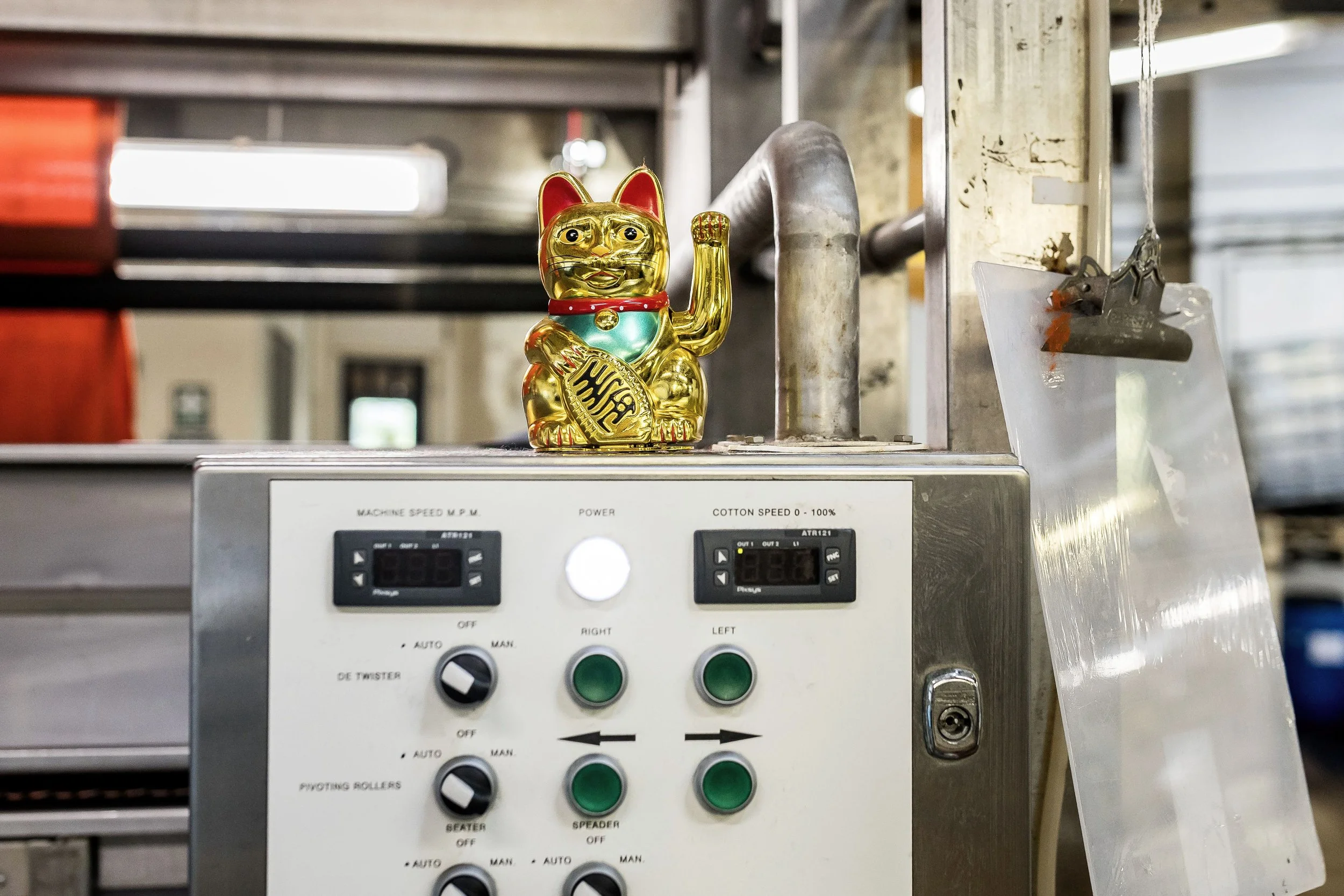
And then there’s the lucky cat, sat on top of a control panel, waving away at everyone who walks past. Nobody could quite tell me how long it’s been there. It’s the sort of detail most people walk straight past, and it’s exactly the sort of thing I’m there to notice.
Shooting alongside a film crew
Working next to Dave and Damian made for a cracking day. Stills and film need different things: they want time and movement, and I want the split second. You learn to read each other, stay out of each other’s frames, and occasionally borrow a moment the other one has set up. If you look closely you’ll spot the edge of a cinema lens in one of my frames.
Why manufacturing photography matters
Lots of manufacturers are brilliant at what they do and terrible at showing it. Their website has a stock photo of a factory that isn’t theirs and not a single real face. That’s a missed opportunity.
Honest photography of your people and your process helps with recruitment. It gives your website and LinkedIn some life, and it shows customers the craft and care they’re paying for. People buy from people, even in business-to-business manufacturing.
A huge thank you to everyone at DP Dyers for letting me get under their feet for the day, to Wonder Agency for bringing me in, and to Dave and Damian for being such good company. The WT Johnson part of the story is coming soon.
If you run a manufacturing business in Huddersfield, Kirklees or anywhere across West Yorkshire and want your people and process shown honestly, get in touch.